Summary:
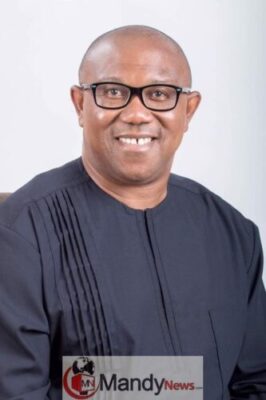
- Final nationwide opinion poll for 2023 Nigerian Presidential elections conducted by NOI Polls Limited (NOIPolls) reveals Mr. Peter Obi of the Labour Party (LP) leading with 21% of registered voters, followed by Asiwaju Bola Ahmed Tinubu of the All Progressives Congress (APC) and Alhaji Atiku Abubakar of the People’s Democratic Party (PDP).
- However, the large number of undecided voters and those who refuse to disclose their preferred candidate leaves Mr. Peter Obi’s 8% lead insufficient to separate him from a leading pack of candidates.
- The poll also revealed high voter participation across all six geopolitical zones and the top reasons for voter inclination being tackling insecurity, inflation, unemployment, infrastructure development, and corruption.
ANAP Foundation commissioned a third and final nationwide opinion poll for the 2023 Nigerian Presidential elections which was conducted by NOI Polls Limited (NOIPolls).
The poll was concluded in February 2023, following two earlier polls carried out in September and December 2022, using almost the same methodology employed in the previous presidential polls conducted by NOIPolls in 2011, 2015 and 2019.
In each of these past polls, the front-runner identified by ANAP ended up winning the elections. In December 2022, ANAP expanded its methodology in the second presidential poll, which included three polls using sample sizes of 1,000, 2,000 and 3,000, and the results showed no significant difference.
The third and final poll conducted in February 2023 revealed that Mr. Peter Obi of the Labour Party (LP) is in the lead, followed by Asiwaju Bola Ahmed Tinubu of the All Progressives Congress (APC) and Alhaji Atiku Abubakar of the People’s Democratic Party (PDP), while Dr. Rabiu Kwankwaso of the New Nigeria Peoples Party (NNPP) emerged as the lone outsider.
The poll shows Mr. Peter Obi leads with 21% of registered voters proposing to vote for him if the presidential election were to be conducted today, followed by Asiwaju Bola Ahmed Tinubu with 13%. Alhaji Atiku Abubakar was third with 10%, and Dr. Rabiu Kwankwaso was a distant fourth with 3% of voters proposing to vote for him.
However, due to the large number of undecided voters and those who refuse to disclose their preferred candidate, Mr. Peter Obi’s 8% lead at this stage is not sufficient to separate him from a leading pack of candidates scoring 13%, 10% and 3%. Undecided voters and those who prefer not to reveal their preferred candidate add up to a significant percentage of 23% and 30%, respectively.
The gender split of undecided voters shows that 27% of women are undecided versus 18% of male registered voters.
In the different geopolitical zones of Nigeria, the percentage of registered voters and/or voters with their Permanent Voter’s Card (PVC) ranges from 88% to 96%, indicating maximum voter participation across all six geopolitical zones. This differs significantly from the 2015 elections, where maximum voter participation was highest in the North West Zone at 80% and lowest in the South South Zone at only 60%.
The ANAP poll also revealed that 9% of respondents confirmed that religion would affect their choice of candidates, while 7% responded affirmatively to ethnicity affecting their choice of candidates.
However, 87% of respondents reported that their choices were not being influenced by religion, while 89% reported that their choices were not influenced by ethnicity.
The poll results also summarized the top five reasons why voters are more inclined to vote in the forthcoming elections. These reasons include the need to tackle insecurity (36%), inflation, unemployment, infrastructure development, and corruption.


