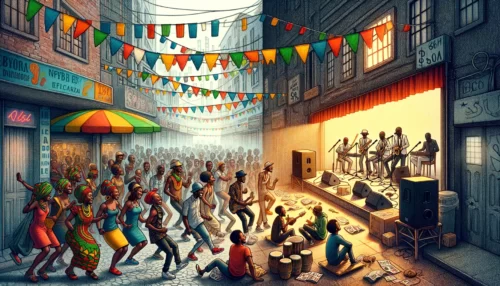
In the pulsating venues of Lagos, where the rhythm of drums and the melody of the streets blend, Afrobeat was born—a sound symbolic of the heart of Africa. Yet, as Afrobeat artists rise to global fame, the very beat that once unified the streets with its affordability and accessibility now risks becoming a distant echo for its local fans.
The Beat of the People, Now Behind a Paywall?
Afrobeat has always been more than music; it’s a movement, a vibrant expression of African culture. It’s the sound of Fela Kuti’s defiance, the rhythm of the people’s struggles, and the dance of liberation. But today, as concert prices soar, there’s a growing fear that Afrobeat may lose its grassroots soul.
A Symphony of Success and Its Discontents
The genre’s skyrocketing success has seen Nigerian artists like Burna Boy and Wizkid fill international arenas. Their music streams in the millions, and their faces grace billboards from Times Square to Tokyo. But back home, fans face ticket prices that are quickly becoming out of reach. The question arises: as the world taps its feet to the beat of Afrobeat, will the local fans who nurtured it be left out?
The High Note’s Downside
The irony is palpable. In a bid to match the production and spectacle of Western concerts, prices have escalated, and the average Nigerian music lover is left grappling with the decision to pay for a single concert or cover basic living expenses. The artists, in turn, face a dilemma—how to balance international acclaim with local allegiance.
The Sound of Silence?
If the trend continues, there’s a real danger that Afrobeat concerts could become silent in their homeland, reserved only for those with deep pockets. This shift not only threatens the inclusivity of Afrobeat but also risks diluting the genre’s authenticity and disconnecting it from its roots.
A Crescendo of Concerns
The conversation is not just about economics; it’s about preserving cultural heritage. Afrobeat was a sound born on the streets, and its spirit lies in its ability to speak to the common man. As prices rise, there’s a collective concern that the music might lose its power to move the masses.
The Harmony of Solutions
The solution doesn’t lie in dimming the starlight of Nigerian artists but in finding a harmony where the music remains accessible to all. This could mean tiered ticket pricing, more free community concerts, or even partnerships with sponsors to subsidize costs. The goal is clear—keep Afrobeat’s heart beating for every Nigerian.
The Beat Must Go On
As the world watches, the hope is that Afrobeat will find a way to remain true to its roots. After all, the genre is more than a musical style; it’s the pulse of a people, the heartbeat of a nation. And that heart must continue to beat loudly—not just on global stages, but in the local communities where its rhythm began.