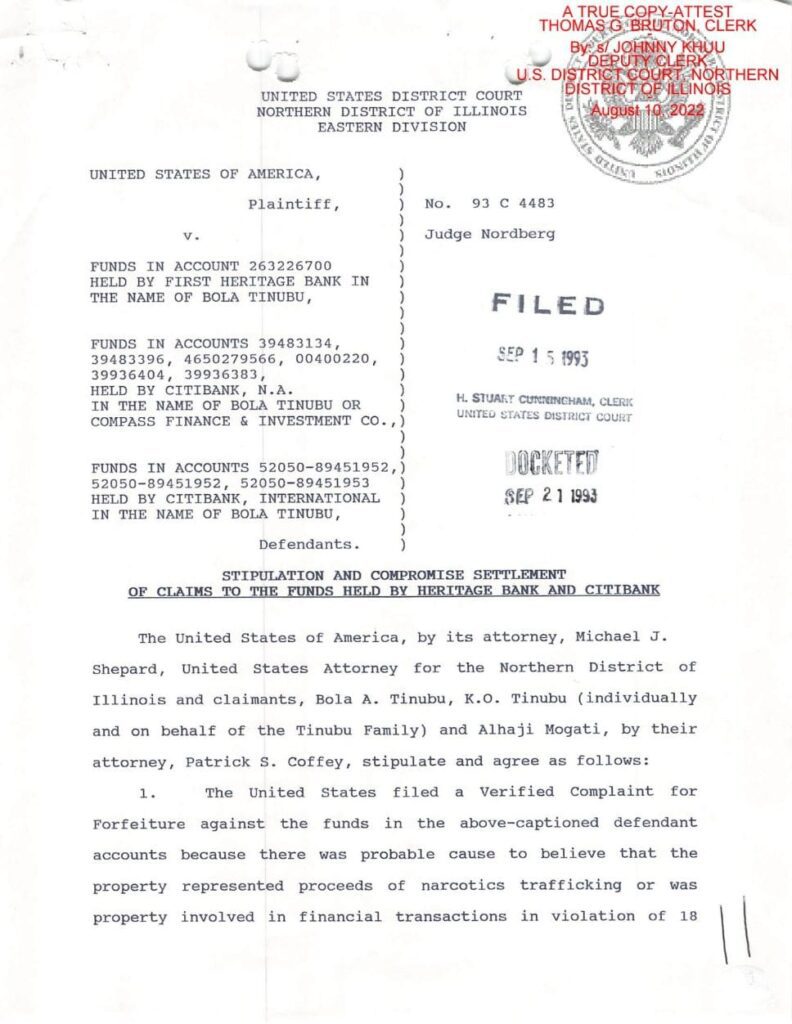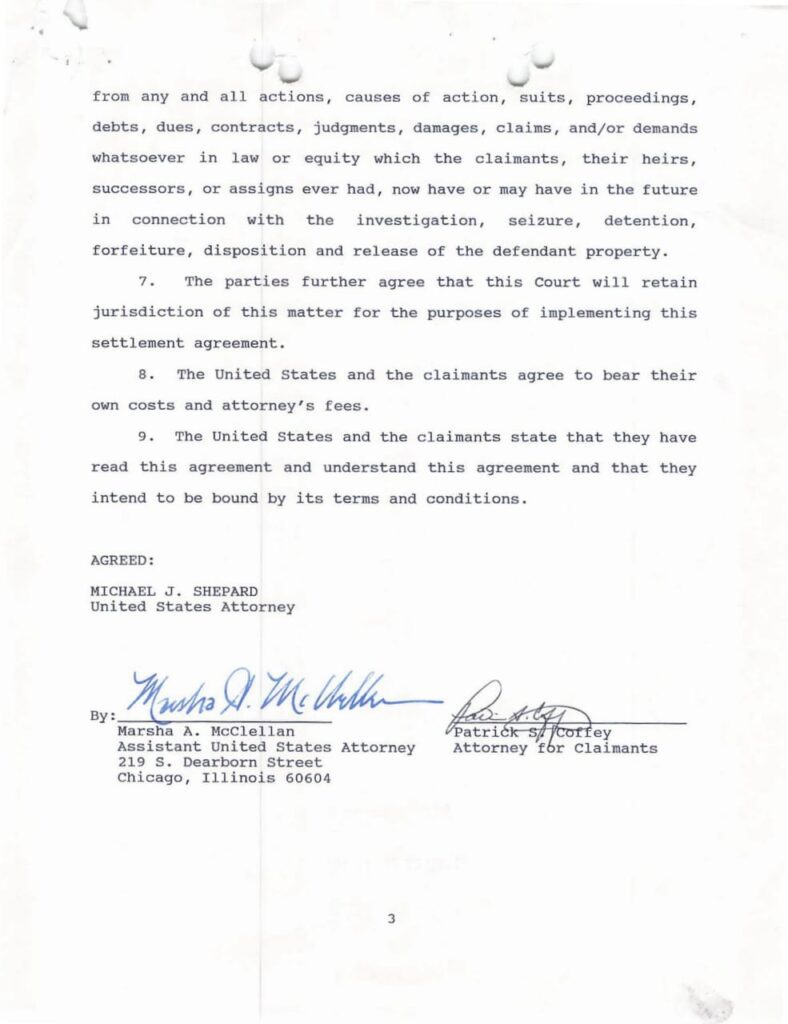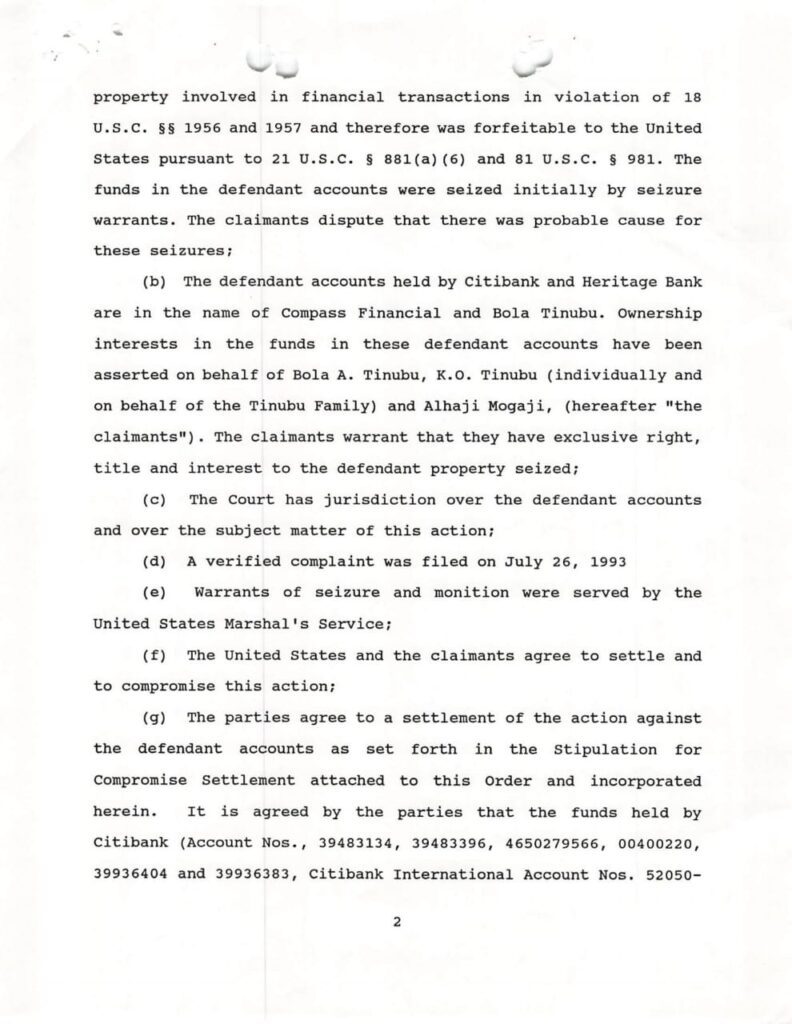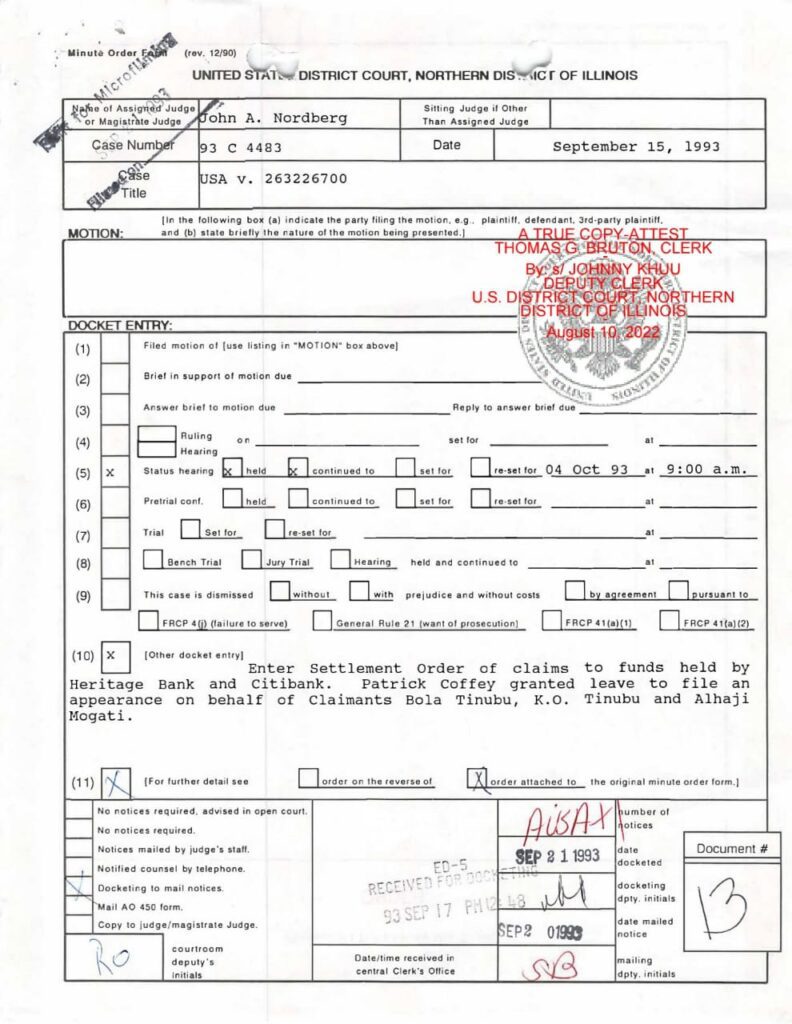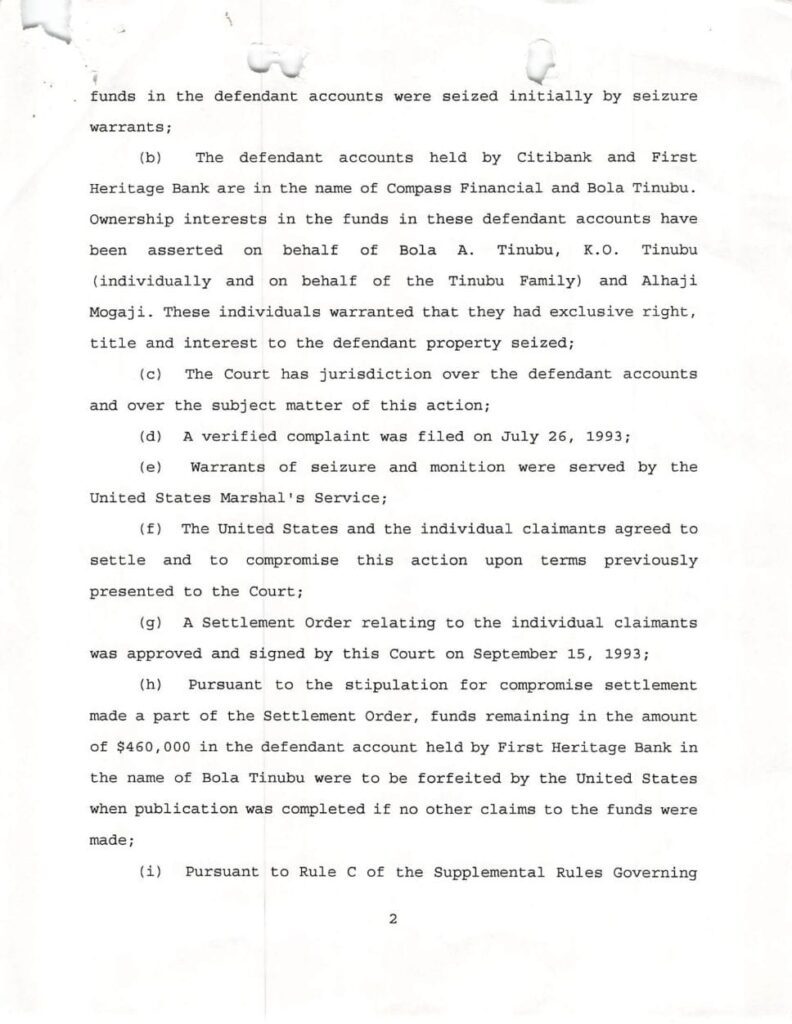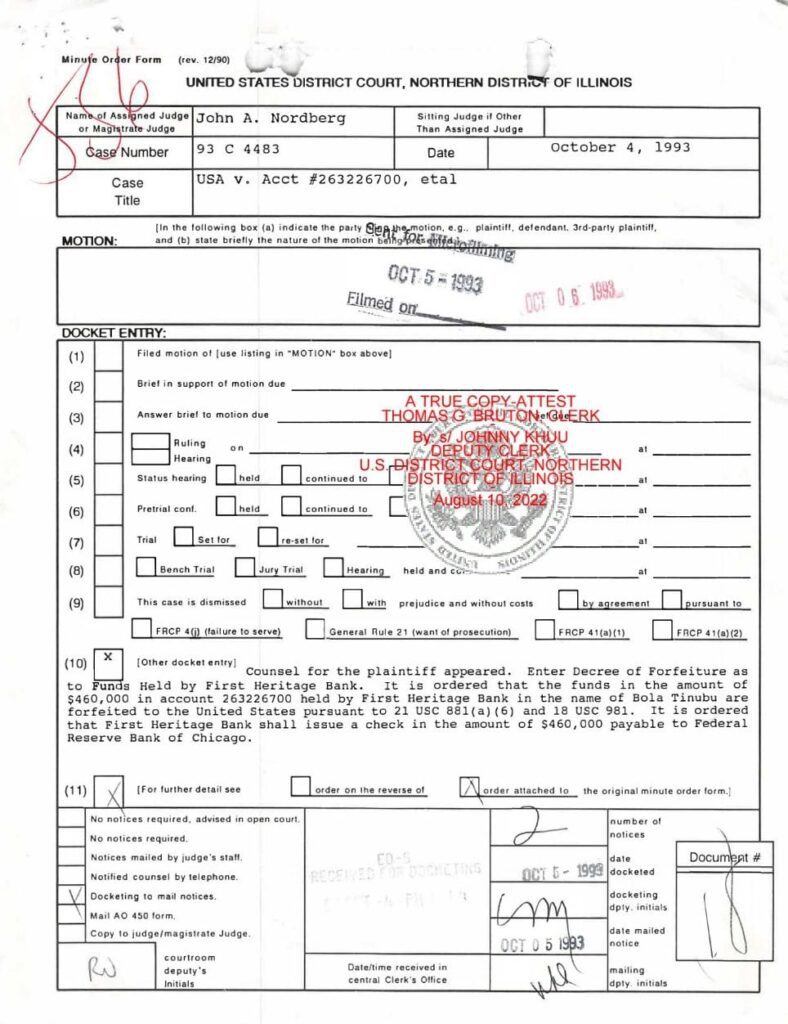
New documents detailing Bola Tinubu’s encounter with American prosecutors over allegations of drug trafficking and money laundering have been made public by the United States District Court for the Northern District of Illinois.
Why it’s good: An increasing number of Nigerians have been tweeting on the microblogging site regarding the former governor of Lagos State’s criminal offenses in the United States in the 1990s.
Before the American government released the documents, Nigerian investigative journalist David Hundeyin had written a report on the allegations, which he titled “Bola Ahmed Tinubu: From Drug Lord to Presidential.”
Mr. Tinubu has refrained from commenting on the drug scandal, which has been in the news since at least the middle of the 2000s. Instead, he has chosen to talk about other aspects of his career in corporate accounting, consulting, and pro-democracy activity.
However, when he applied to run for office, he told the electoral authority, INEC, that he had never been convicted of a crime before.
But, because of the files that were made public on Tuesday, he is now the target of a heated political and public backlash for his involvement in a Chicago drug trafficking case that took place during the early 1990s.
The supporters of the former governor of Lagos and presidential candidate of the ruling All Progressives Congress have also made an effort to completely dismiss the incident as a pointless diversion from Nigeria’s democratic experience because it occurred decades ago in another time.
Nigerians, meanwhile, have steadfastly demanded that the presidential candidate reveal his role in the case, which resulted in his forfeiture of up to $460,000 to American authorities in 1993.
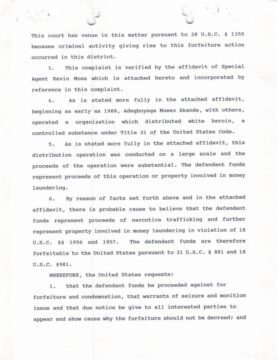
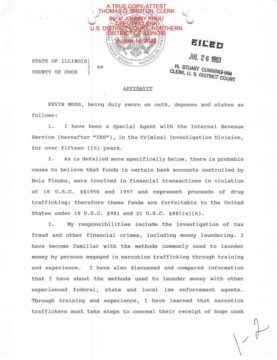
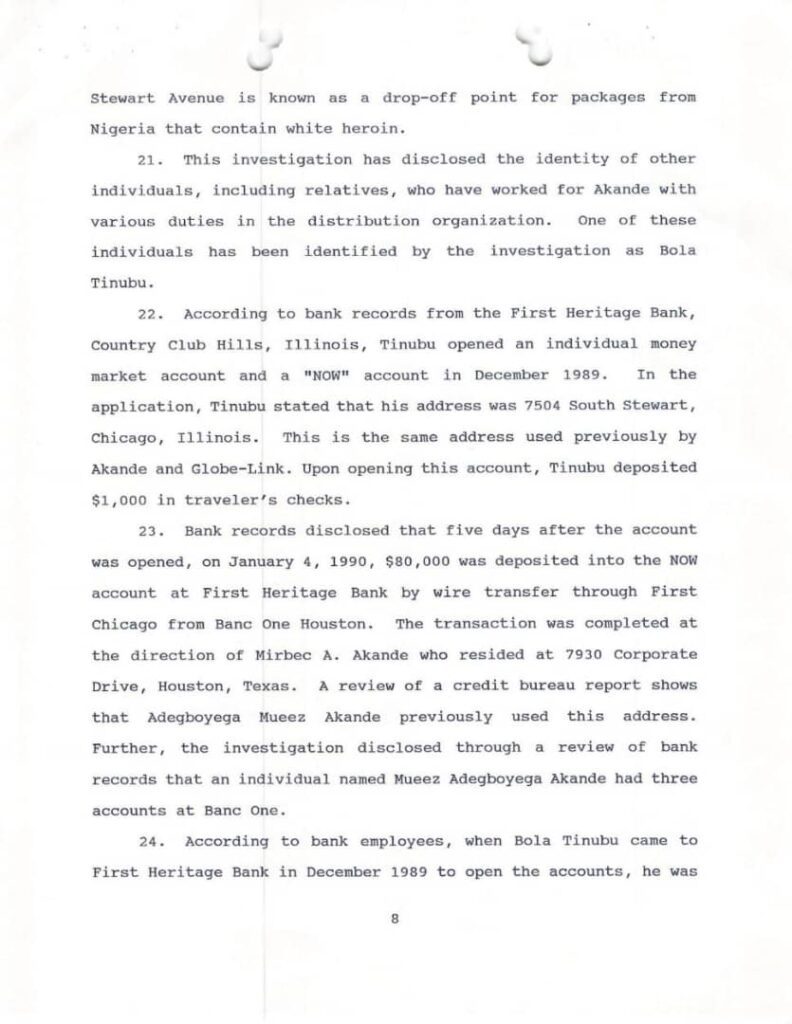
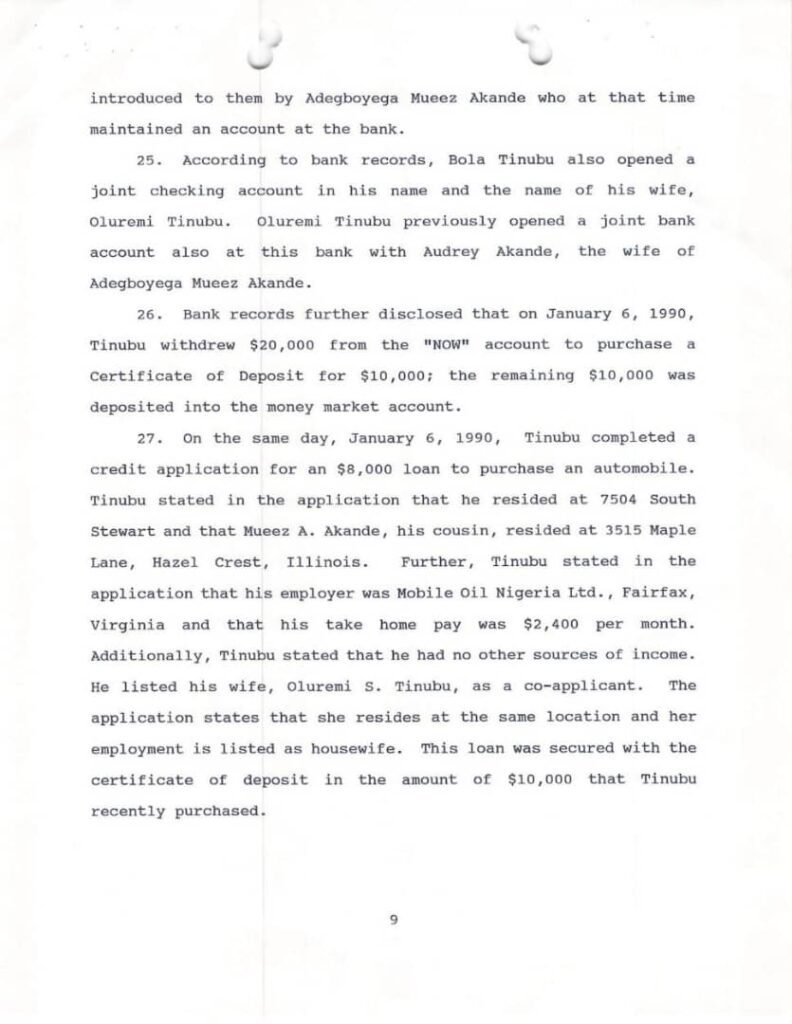
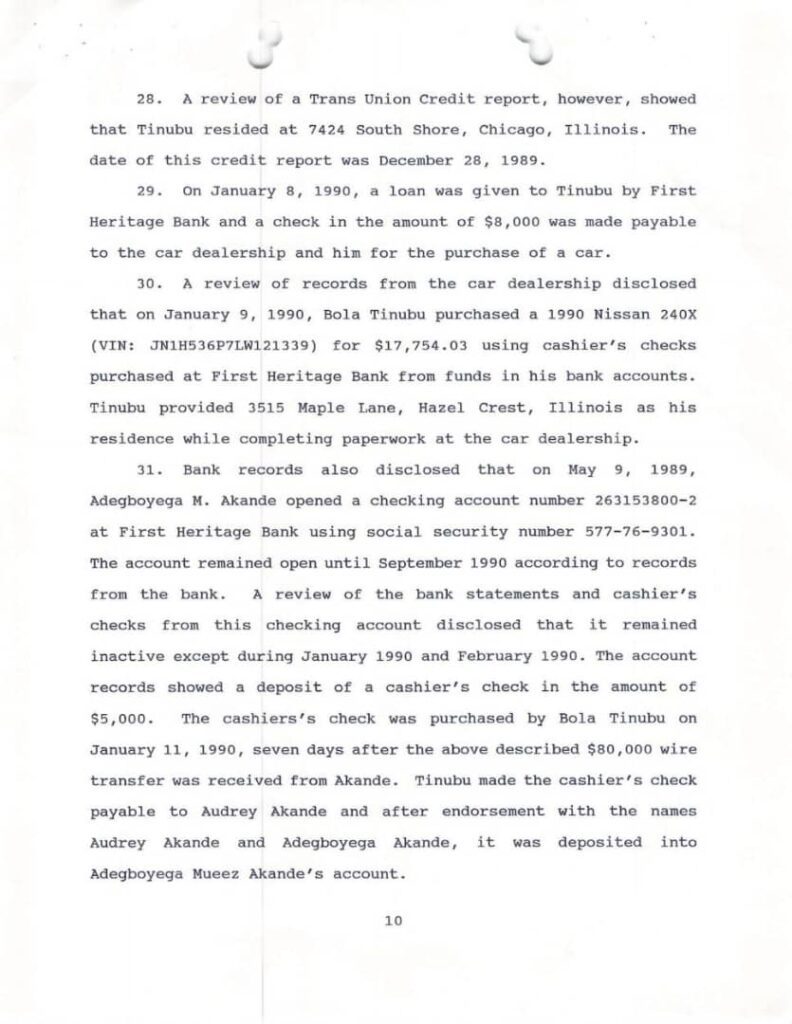
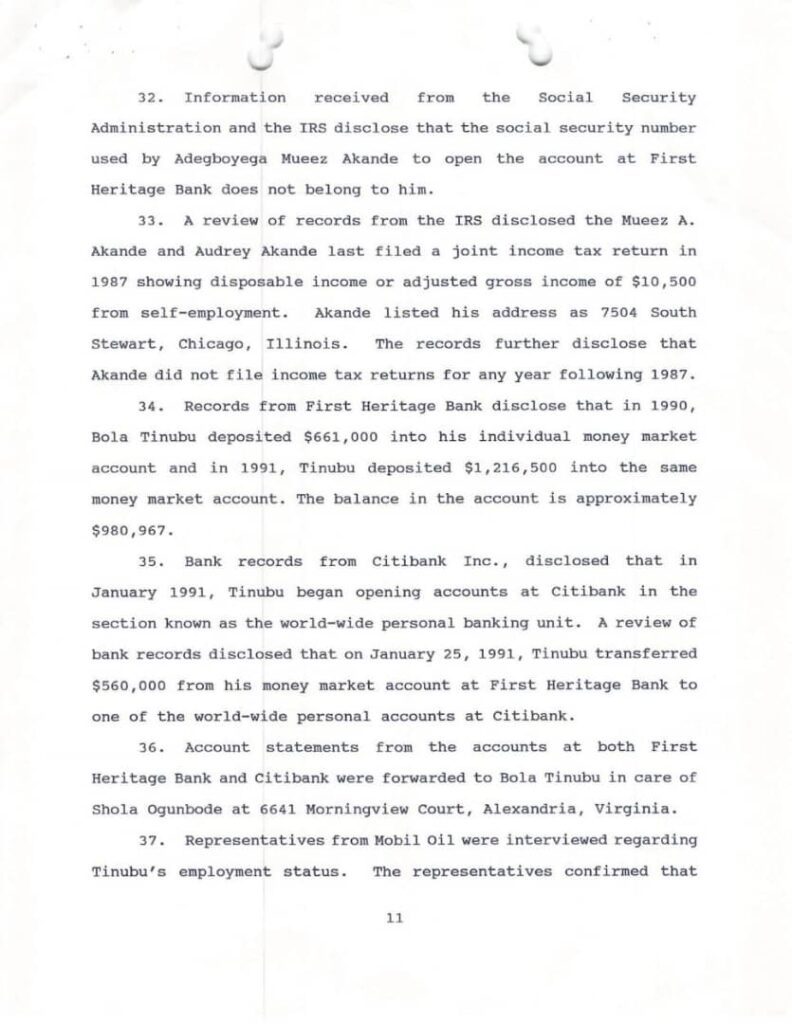
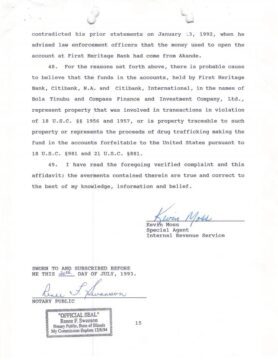
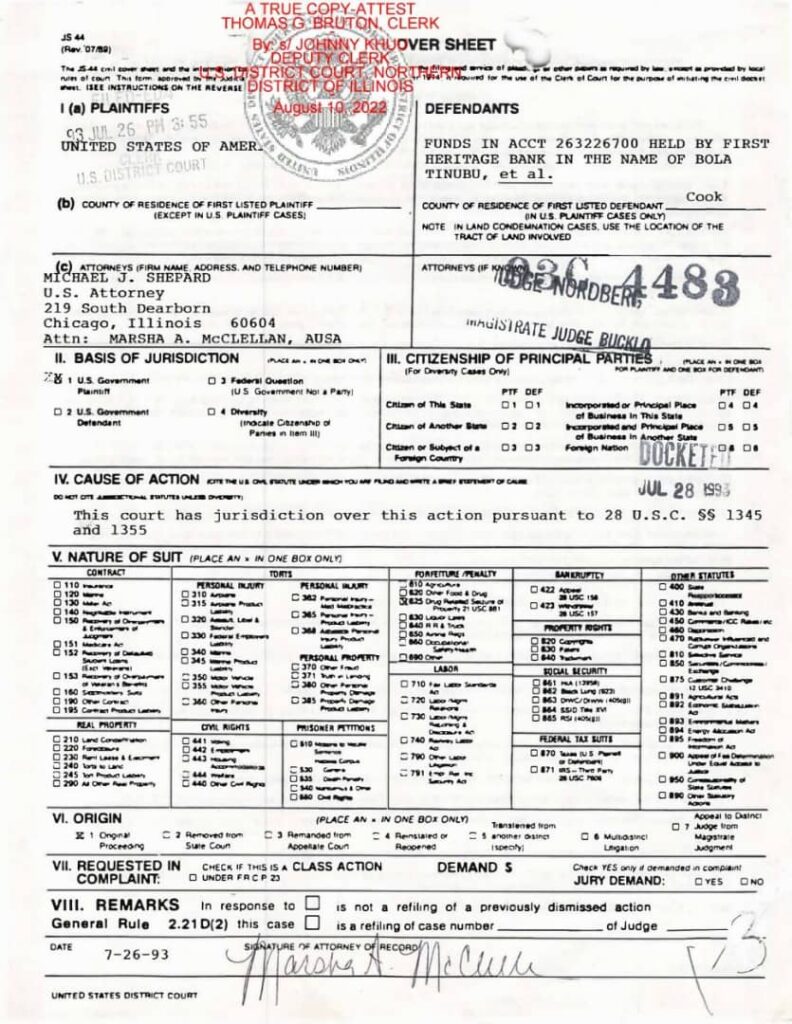
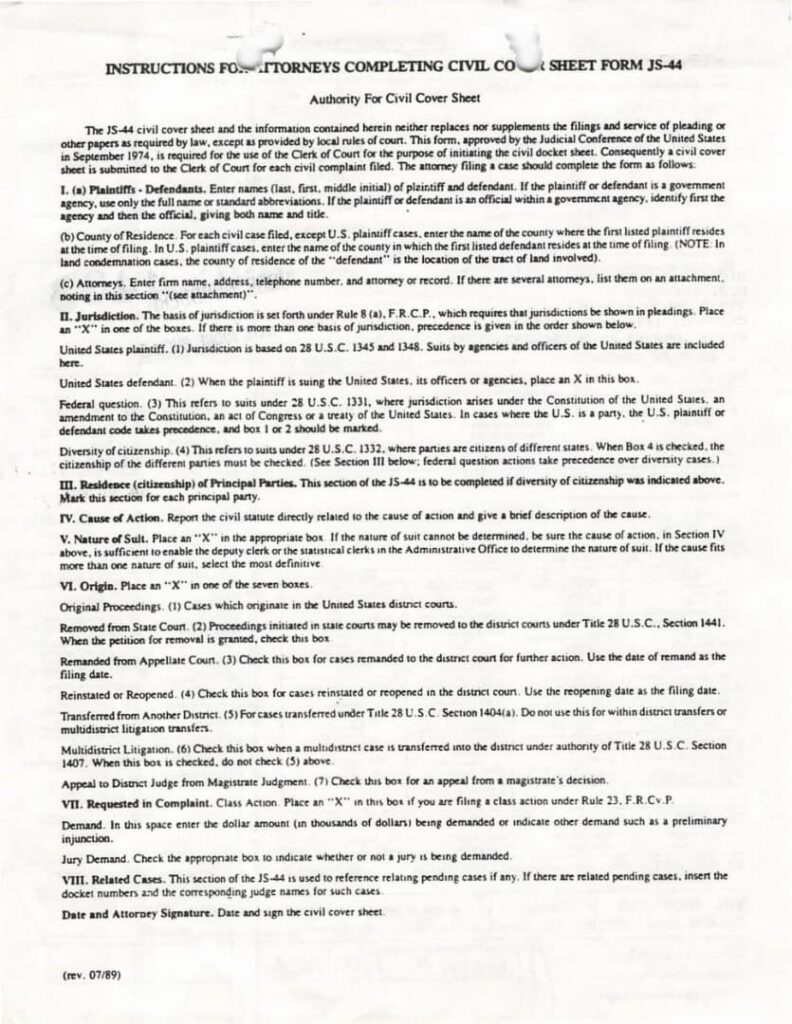
The 56-page document, which was made public by the district court’s Chicago headquarters, did not reveal any significant new information, but it did validate some things that had been mentioned in passing by the media for years.
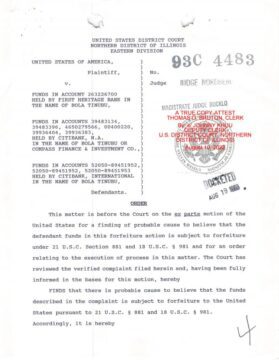
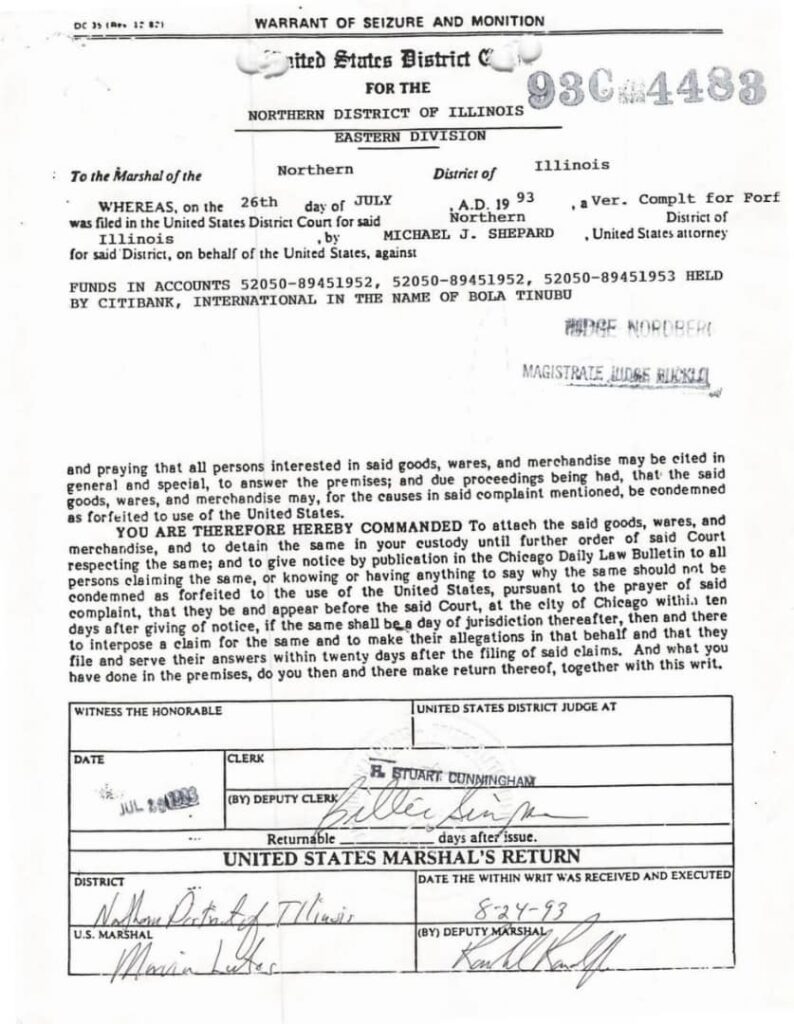
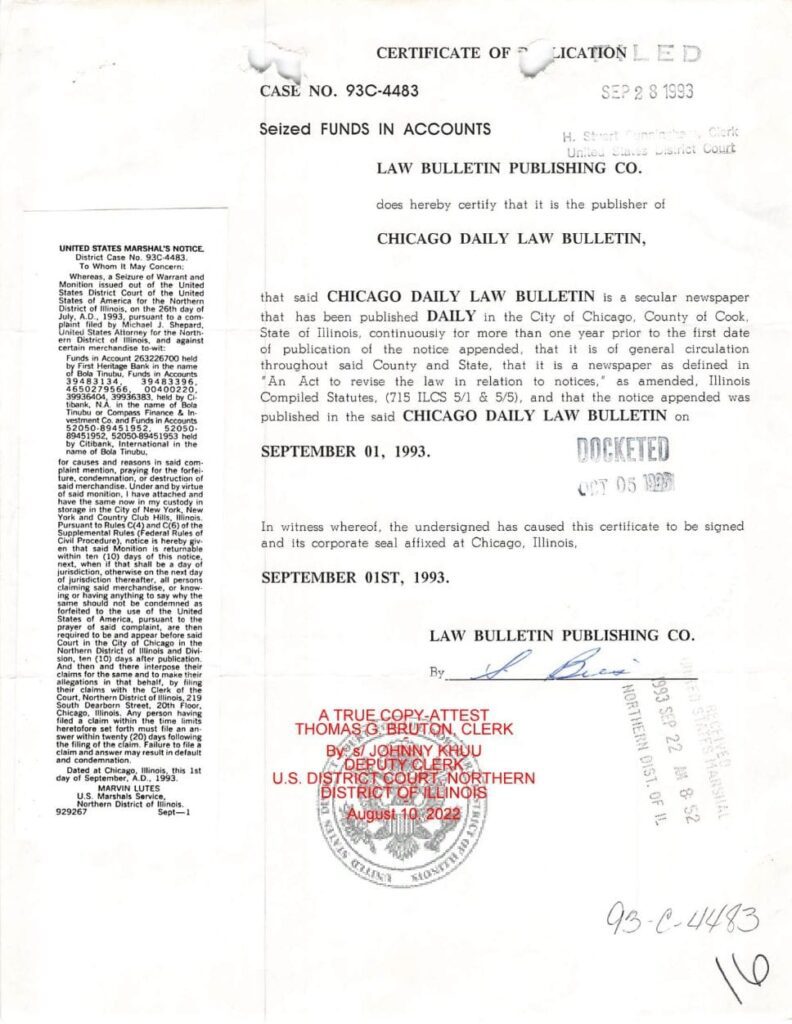
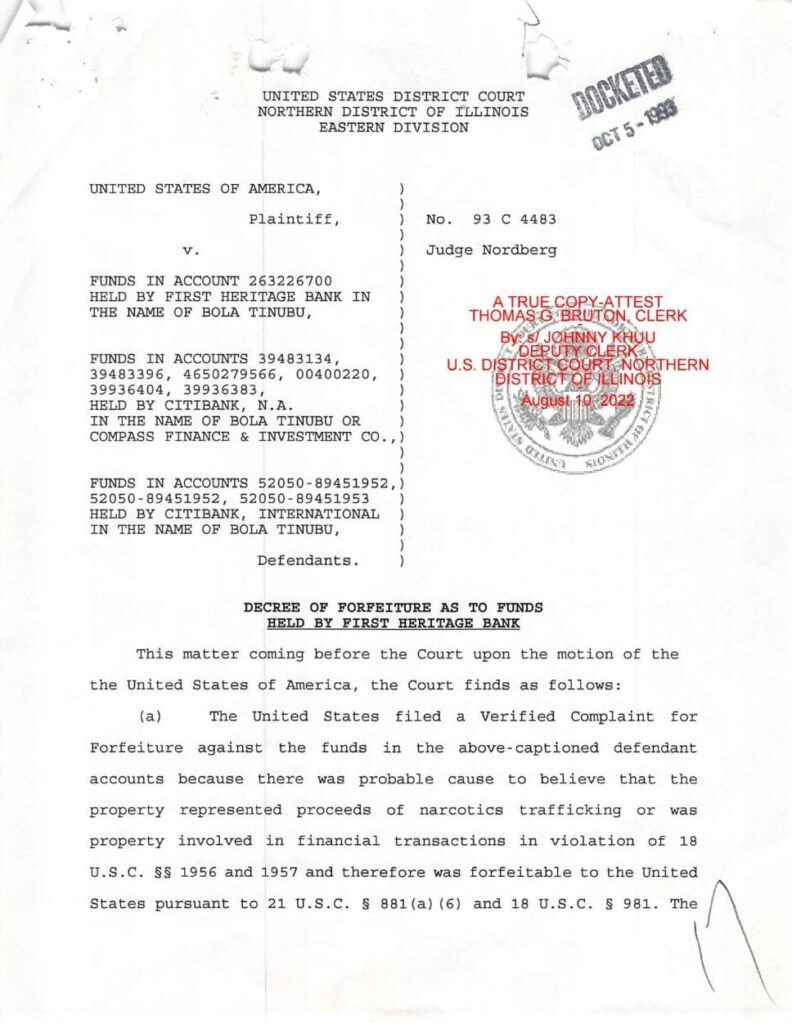
According to the most recent verified documents of the court case, which were received on August 10, Mr. Tinubu and two other people called K.O. Tinubu and Alhaji Mogati were involved in laundering money and banking the proceeds of illegal drug sales at Heritage Bank and Citibank.
The United States sought the confiscation of the drug money Mr. Tinubu was alleged to have laundered in July 1993. In a deal reached between the Tinubus and the American government, the money in the Heritage Bank account was allowed to stay, but the $460,000 in the Citibank account was forfeited.
After that, on September 21, 1993, a federal judge dismissed the case with prejudice, thereby barring the parties from pursuing the case in court again. However, it was still unclear whether Nigerian officials might still file charges against Mr. Tinubu in Nigerian courts for the same issue.
In order to hold Mr. Tinubu accountable for the incident, Kalu Kalu Agu, an Abuja-based attorney with ties to the opposition political party, has been one of the plaintiffs. Before the February presidential elections, he requested that the EFCC and NDLEA, Nigeria’s anti-graft and anti-narcotics agencies, respectively, look into Mr. Tinubu’s alleged involvement in the drug accusations.
Mr. Kalu Agu instructed both offices in the petition filed on November 8 to take action against Mr. Tinubu within seven days, failing which they would be subject to a judicial order of mandamus, which instructs a public agency to carry out a public duty.
- “It is our view that you have a historic duty to ensure that Senator Bola Ahmed Tinubu is called to account for his deeds in money laundering arising from his involvement in narcotics trafficking,” he said.
Check out the documents below.